
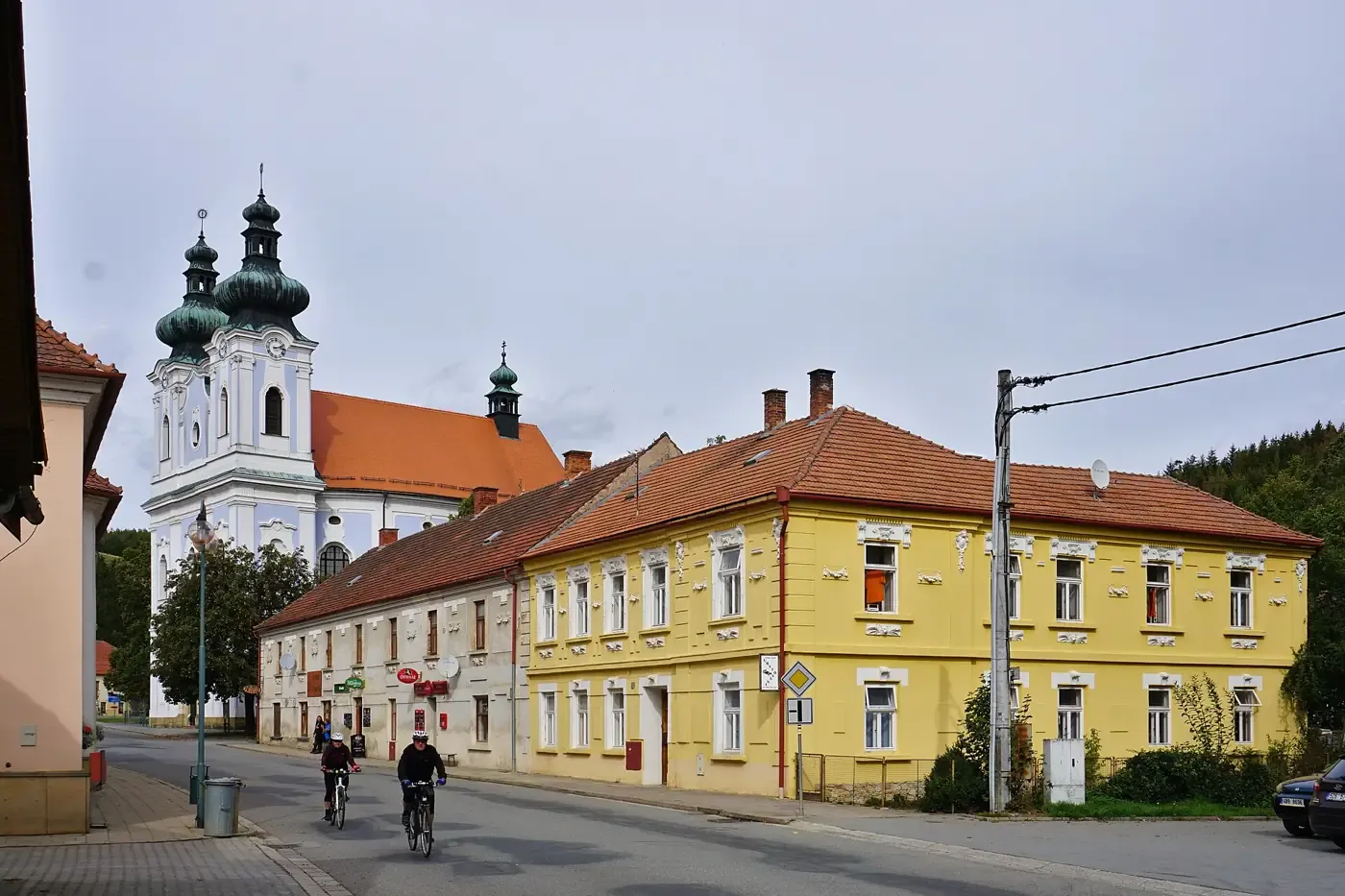
The market town of Sloup (population 972) is the northern gateway to the Moravian Karst — and according to our itinerary, the best base for the rest of the week too. Right here you’ll find the Sloup-Šošůvka Caves, home to the world-famous Elisabeth Cave, the Svícen stalagmite, and the Kůlna Cave, where traces of settlement dating back 120,000 years have been discovered.
QUICK LINKS 🏛️ Why visit · 🛏️ Where to stay · ❓ FAQ
Why visit
The name Sloup (“column”) comes from the isolated, pillar-like rock formation known as Hřebenáč, which towers directly above the entrance area to the caves. The Sloup-Šošůvka Caves form one of the longest cave systems in the Czech Republic and offer several different tour options — for details, see our dedicated article.
The town’s landmark is the Baroque Church of Our Lady of Sorrows, built in 1754 on the site of an old pilgrimage tradition — according to legend, a small wooden statue of the Virgin Mary miraculously healed a miller’s daughter here, and pilgrims from far and wide have travelled to the site ever since. The church crypt also holds the remains of its founder, Countess Karolina von Rogendorf.
Sloup is a modern village with its own outdoor swimming pool, a campsite, and several places to stay — in 2000, it even won the national Village of the Year competition.
Where to stay
Thanks to its location right by the caves and at the crossroads of hiking and cycling routes, we think Sloup makes the best base for a multi-day stay in the region — see our recommendations in the seven-day itinerary. The village has a swimming pool with a restaurant, a campsite, and several guesthouses; for current accommodation options, visit tydenvkrasu.cz directly.
Frequently asked questions
Why is Sloup a better base than Blansko? Sloup sits right by the caves and the Pustý žleb gorge, so you won’t need to travel anywhere during the first days of your week — Blansko, on the other hand, is better if you’re travelling without a car and want to be close to rail connections.
Can you swim in Sloup? Yes, the village runs its own outdoor swimming pool with a restaurant.
What does the name Hřebenáč mean? It refers to the isolated, pillar-shaped rock formation above the entrance to the caves, which also gave the whole village of Sloup its name.
Part of the series A Week in the Moravian Karst: The Complete 7-Day Itinerary. For more on the caves, see The Sloup-Šošůvka Caves. Sources: brochure by the Association for the Development of the Moravian Karst Countryside (published with support from the Czech Ministry for Regional Development). Details about the village may change over time — for up-to-date information, visit mestyssloup.cz.
Complete 7-day itinerary — free
Get a detailed week-long plan sent to you: caves, Macocha, day trips, where to stay. The PDF arrives by email right away.